

offical emerging solutions partner, speaker and exhibitor to slope stability x26
Maccaferri — 145 years of engineering the ground to hold, wherever the risk is greatest.
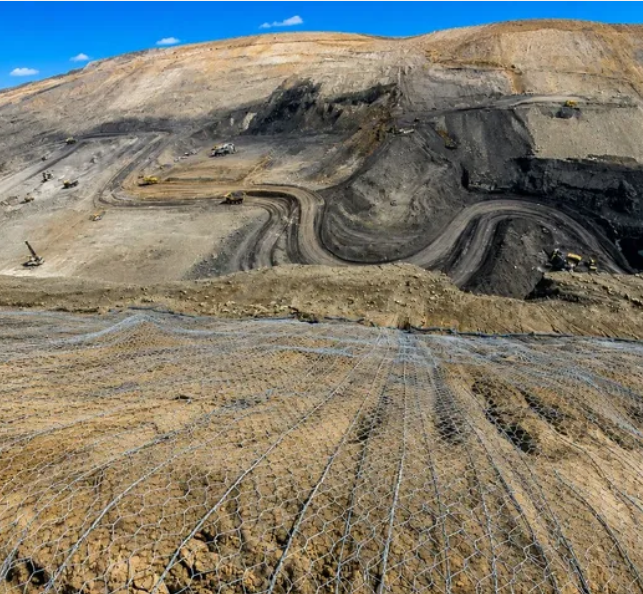
From rockfall barriers on African mine haul roads to reinforced slopes on open-pit walls, Maccaferri turns geohazard risk into engineered, monitored protection — backed by a global platform and more than a century of ground engineering heritage.
about
Every safe structure starts with proven ground
Maccaferri is a global leader in geotechnical engineering, rockfall mitigation and slope stabilisation, with a heritage spanning more than 140 years since its founding in Italy in 1879. Today the company operates as one global engineering platform, with Maccaferri South Africa (Pty) Ltd based in Paulshof, Sandton, serving the Central and Southern Africa region as part of Maccaferri’s Middle East & Africa operating group.
Across mining, infrastructure and civil projects, Maccaferri delivers engineered — not off-the-shelf — solutions for the assessment, control and mitigation of rockfall, landslide and slope instability risk. The company’s mining division is built around a simple but demanding proposition: understand why a slope actually fails, then engineer a response calibrated to that specific failure mode. That discipline runs through rock mass characterisation and trajectory modelling, product specification, installation supervision and — increasingly — continuous digital monitoring through the group’s HELLOMAC IoT platform.
By combining advanced technology, engineering expertise and decades of field experience across every continent, Maccaferri develops solutions that enhance safety, improve infrastructure resilience and reduce long-term maintenance cost for the mines, roads, railways, dams and industrial sites that depend on it.
Maccaferri South Africa (Pty) Ltd Unit 1, Cambridge Commercial Park, 22 Witkoppen Road, Paulshof, Sandton, 2056 info.za@maccaferri.com · +27 (0)11 010 0651
Leadership Message
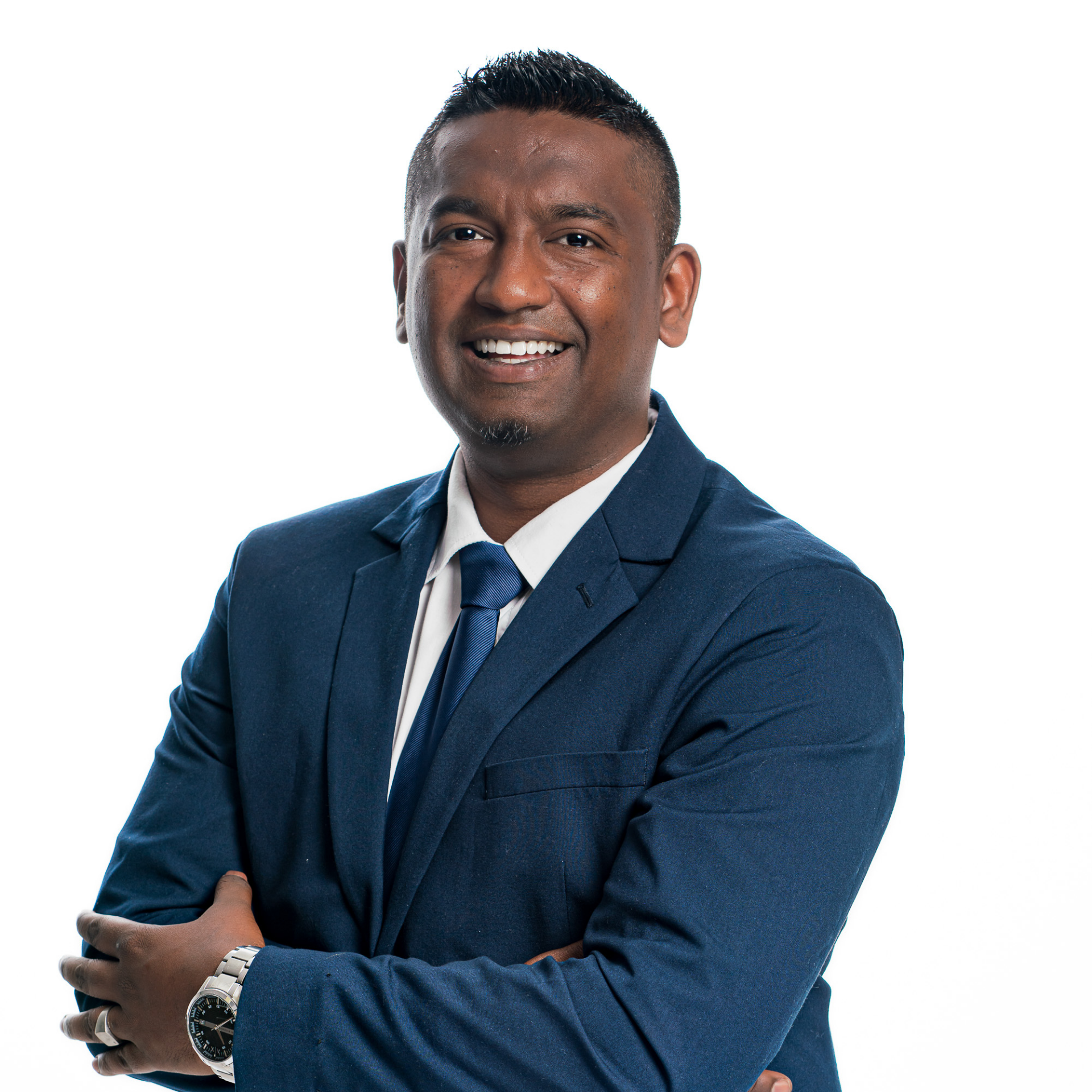
Mr. Blaise Trevyn Jacob
Head of Sales: Central & Southern Africa | Head of Rockfall Mitigation Business Unit | Maccaferri Africa
Across every open pit and haul road we work on, the conversation is the same: efficiency and safety are no longer competing priorities, they are the same objective seen from two angles. That is the standard Maccaferri has built its mining and geotechnical business around for more than 140 years — not selling barriers and mesh off a catalogue, but understanding why a slope is likely to fail, and engineering a response calibrated to that specific hazard.
Leading our Central and Southern Africa sales team, and our Rockfall Mitigation Business specifically, has shown me how much of that gap is closed by a simple discipline: never treating a protection system as a completed task. A mesh or barrier installed once and never revisited is a mesh or barrier nobody has checked against the impact energy the slope can actually produce. Our role — from our Sandton office out across the region — is to make sure that check happens, and keeps happening, through rock mass characterisation, trajectory modelling, engineered systems and continuous monitoring via our HELLOMAC platform.
I hold a BSc in Civil Engineering from the University of KwaZulu-Natal, a Postgraduate Diploma in Management Practice from Henley Business School, and I am currently completing my MBA, also through Henley. My path into this business began with a specialised internship in Italy focused on geosynthetics, rockfall mitigation and gabion systems — a grounding that has shaped how I think about engineering solutions ever since: technically rigorous first, commercially sensible second, and always specified against the real conditions on the ground, not a generic industry default.
We are proud to bring that approach to the stage at Slope Stability X26, and to the exhibition floor for the two days that follow.
Mr. Blaise Trevyn Jacob
Head of Sales: Central & Southern Africa | Head of Rockfall Mitigation Business Unit | Maccaferri Africa
I'm speaking at Slope Stability X26
Rockfall Mitigation Solutions: Innovative Systems for Slope Stabilization, Hazard Protection and Infrastructure Resilience
Day 1 · 10 September · 14:30–15:00 · Emerging Solutions
solutions
From hazard assessment to systems that are built to be checked, not just installed
Maccaferri provides integrated rockfall mitigation and slope stabilisation solutions that connect hazard assessment, engineered product specification, installation and continuous monitoring.
Our capabilities include:
Rockfall Mitigation Systems High-energy dynamic and static rockfall barriers, drapery and attenuation systems, anchored mesh stabilisation, rockfall netting solutions including MacArmour and SteelGrid, and debris flow barriers — each specified against real trajectory modelling and hazard characterisation rather than a catalogue default.
High-Strength Drape & Netting MacMat HS and related steel netting systems for slopes and pit walls where impact energy, geometry and rockfall trajectory demand a system engineered to that specific site, not a generic industry standard.
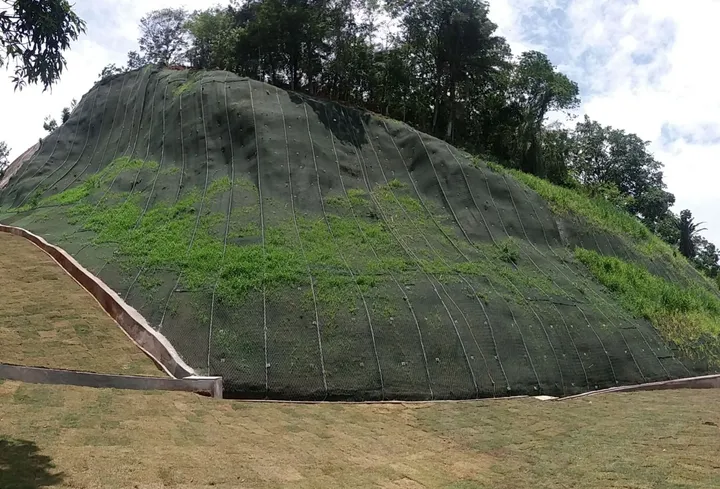
Geosynthetics & Earth Retention TerraMesh and the broader double-twist and geosynthetics range for slope and retaining-wall stabilisation, soil reinforcement, soil nailing and anchoring — supporting haul roads, pit walls and infrastructure on unstable or marginal ground.
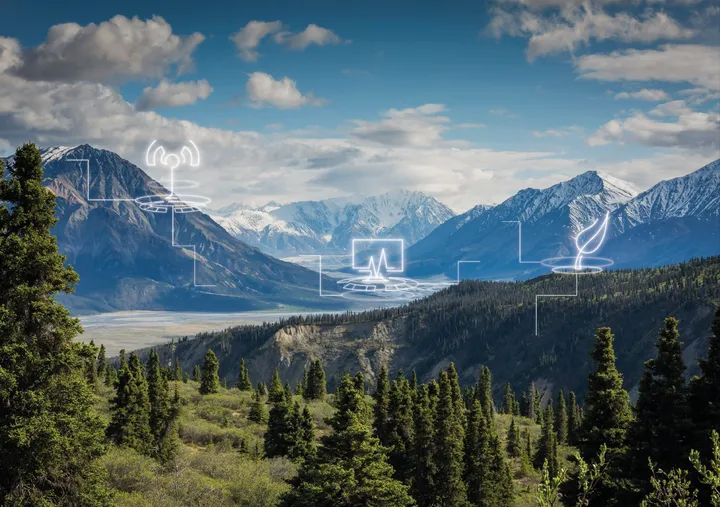
Continuous Monitoring — HELLOMAC Maccaferri’s IoT platform lets mines monitor protection systems and geohazards continuously, so a rockfall barrier or mesh installation stays calibrated to site conditions that are constantly changing, rather than being treated as a completed task the day it goes in.
Geohazard Risk Assessment & Design Support Geohazard risk assessments, geotechnical investigations, design and engineering support delivered by a multidisciplinary team from concept through completion.
Installation Supervision & Asset Management Product supply and quality assurance, installation supervision and asset management solutions that keep protection systems performing for the life of the asset, not just at handover.
These capabilities enable Maccaferri to support mining and infrastructure clients from initial hazard characterisation through engineered design, installation and long-term, monitored performance.
What We Do
Engineering excellence, applied to Africa’s mines and infrastructure
Maccaferri delivers specialised rockfall mitigation, slope stabilisation and geotechnical engineering services across the mining, infrastructure and built environment sectors.
Rock Mass Characterisation & Trajectory Modelling We assess the hazard before any product is chosen — rock mass characterisation, trajectory modelling and geohazard risk assessment that determine the energy and geometry a protection system actually needs to withstand.
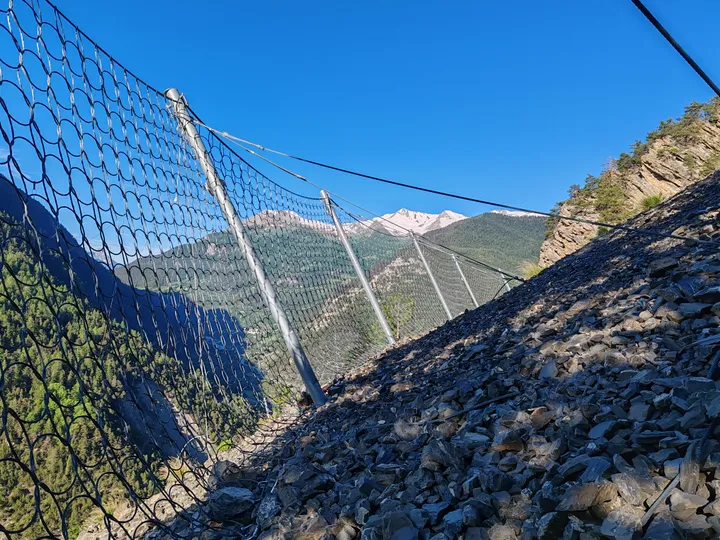
Dynamic & Static Rockfall Barriers Barrier systems engineered to intercept and absorb rockfall energy at the specific magnitude the site geology produces, protecting haul roads, pit floors, infrastructure and personnel.
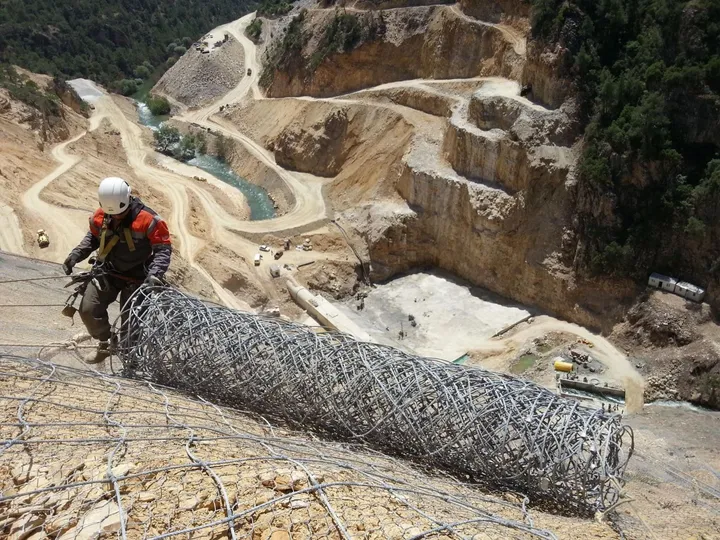
Drapery, Mesh & Netting Systems MacMat HS high-strength drape mesh, MacArmour and SteelGrid netting, and simple drapery systems for slopes where controlled containment of rockfall is the priority.
Slope & Retaining Wall Stabilisation TerraMesh and reinforced soil systems for slope reinforcement and retaining structures, supporting construction on soft, marginal or unstable ground.
Debris Flow & Hazard Protection Debris flow barriers and hazard protection systems for sites exposed to combined rockfall, erosion and slope-movement risk.
Continuous Monitoring & Digital Asset Management HELLOMAC IoT monitoring so protection systems and the geohazards behind them are tracked continuously — turning a single installation into a living, verifiable system.
Installation Supervision, Training & Quality Control Field supervision, technical and commercial training, and quality control and testing of rockfall mitigation products, delivered by a team that has grown its own engineers from graduate to senior management level in-region.
Design & Engineering Support Geotechnical investigations, design and engineering support delivered end-to-end, from concept through to completion and asset handover.
These capabilities let Maccaferri support projects from first hazard assessment through to design, construction, installation and monitored, in-service performance — with a Central and Southern Africa team resourced to deliver all of it in-region.
meet us
Maccaferri Africa’s Team at SSX26

Nadeena Le’Tang, Senior Marketing Manager | Maccaferri Africa
Profile Coming Soon.
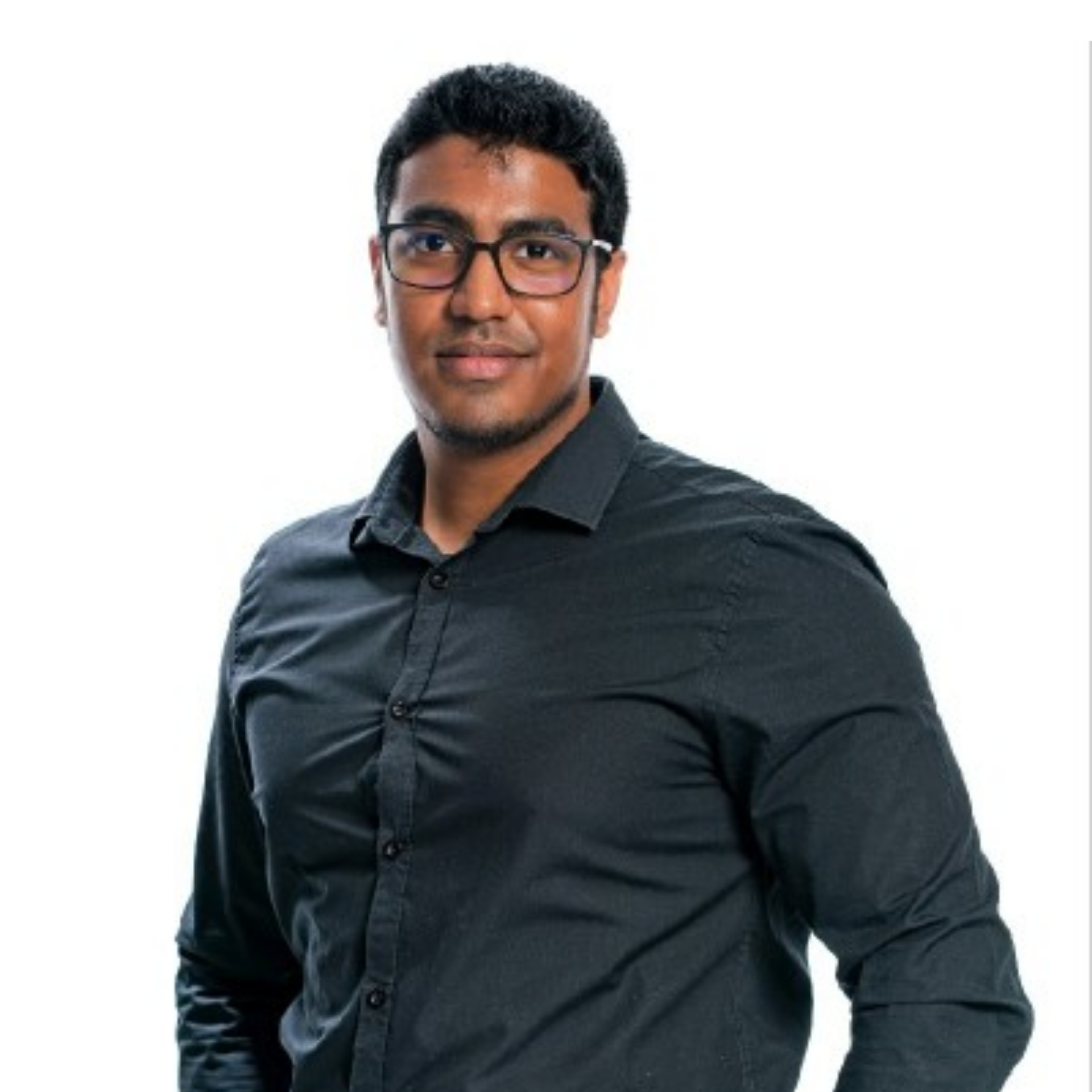
Brendon Naidoo, Commercial Civil Engineer | Maccaferri Africa
Profile Coming Soon.

Yugeshnee Naidoo, Head of Sales | Maccaferri East Africa
Profile Coming Soon.
official emerging solutions partner, keynote speaker and exhibitor
Maccaferri — 145 years of engineering the ground to hold, wherever the risk is greatest.
From rockfall barriers on African mine haul roads to reinforced slopes on open-pit walls, Maccaferri turns geohazard risk into engineered, monitored protection — backed by a global platform and more than a century of ground engineering heritage.
leadership message
Mr. Blaise Trevyn Jacob
Head of Sales: Central & Southern Africa | Head of Rockfall Mitigation Business Unit | Maccaferri Africa
Across every open pit and haul road we work on, the conversation is the same: efficiency and safety are no longer competing priorities, they are the same objective seen from two angles. That is the standard Maccaferri has built its mining and geotechnical business around for more than 140 years — not selling barriers and mesh off a catalogue, but understanding why a slope is likely to fail, and engineering a response calibrated to that specific hazard.
Leading our Central and Southern Africa sales team, and our Rockfall Mitigation Business specifically, has shown me how much of that gap is closed by a simple discipline: never treating a protection system as a completed task. A mesh or barrier installed once and never revisited is a mesh or barrier nobody has checked against the impact energy the slope can actually produce. Our role — from our Sandton office out across the region — is to make sure that check happens, and keeps happening, through rock mass characterisation, trajectory modelling, engineered systems and continuous monitoring via our HELLOMAC platform.
I hold a BSc in Civil Engineering from the University of KwaZulu-Natal, a Postgraduate Diploma in Management Practice from Henley Business School, and I am currently completing my MBA, also through Henley. My path into this business began with a specialised internship in Italy focused on geosynthetics, rockfall mitigation and gabion systems — a grounding that has shaped how I think about engineering solutions ever since: technically rigorous first, commercially sensible second, and always specified against the real conditions on the ground, not a generic industry default.
We are proud to bring that approach to the stage at Slope Stability X26, and to the exhibition floor for the two days that follow.
I'm speaking at Slope Stability X26
Rockfall Mitigation Solutions: Innovative Systems for Slope Stabilization, Hazard Protection and Infrastructure Resilience
Day 1 · 10 September · 14:30–15:00 · Emerging Solutions
About
One global platform, engineered for African ground
Maccaferri is a global leader in geotechnical engineering, rockfall mitigation and slope stabilisation, with a heritage spanning more than 140 years since its founding in Italy in 1879. Today the company operates as one global engineering platform, with Maccaferri South Africa (Pty) Ltd based in Paulshof, Sandton, serving the Central and Southern Africa region as part of Maccaferri’s Middle East & Africa operating group.
Across mining, infrastructure and civil projects, Maccaferri delivers engineered — not off-the-shelf — solutions for the assessment, control and mitigation of rockfall, landslide and slope instability risk. The company’s mining division is built around a simple but demanding proposition: understand why a slope actually fails, then engineer a response calibrated to that specific failure mode. That discipline runs through rock mass characterisation and trajectory modelling, product specification, installation supervision and — increasingly — continuous digital monitoring through the group’s HELLOMAC IoT platform.
By combining advanced technology, engineering expertise and decades of field experience across every continent, Maccaferri develops solutions that enhance safety, improve infrastructure resilience and reduce long-term maintenance cost for the mines, roads, railways, dams and industrial sites that depend on it.
Maccaferri South Africa (Pty) Ltd Unit 1, Cambridge Commercial Park, 22 Witkoppen Road, Paulshof, Sandton, 2056 info.za@maccaferri.com · +27 (0)11 010 0651
What We Do
Engineering excellence, applied to Africa’s mines and infrastructure
Maccaferri delivers specialised rockfall mitigation, slope stabilisation and geotechnical engineering services across the mining, infrastructure and built environment sectors.
Rock Mass Characterisation & Trajectory Modelling We assess the hazard before any product is chosen — rock mass characterisation, trajectory modelling and geohazard risk assessment that determine the energy and geometry a protection system actually needs to withstand.
Dynamic & Static Rockfall Barriers Barrier systems engineered to intercept and absorb rockfall energy at the specific magnitude the site geology produces, protecting haul roads, pit floors, infrastructure and personnel.
Drapery, Mesh & Netting Systems MacMat HS high-strength drape mesh, MacArmour and SteelGrid netting, and simple drapery systems for slopes where controlled containment of rockfall is the priority.
Slope & Retaining Wall Stabilisation TerraMesh and reinforced soil systems for slope reinforcement and retaining structures, supporting construction on soft, marginal or unstable ground.
Debris Flow & Hazard Protection Debris flow barriers and hazard protection systems for sites exposed to combined rockfall, erosion and slope-movement risk.
Continuous Monitoring & Digital Asset Management HELLOMAC IoT monitoring so protection systems and the geohazards behind them are tracked continuously — turning a single installation into a living, verifiable system.
Installation Supervision, Training & Quality Control Field supervision, technical and commercial training, and quality control and testing of rockfall mitigation products, delivered by a team that has grown its own engineers from graduate to senior management level in-region.
Design & Engineering Support Geotechnical investigations, design and engineering support delivered end-to-end, from concept through to completion and asset handover.
These capabilities let Maccaferri support projects from first hazard assessment through to design, construction, installation and monitored, in-service performance — with a Central and Southern Africa team resourced to deliver all of it in-region.
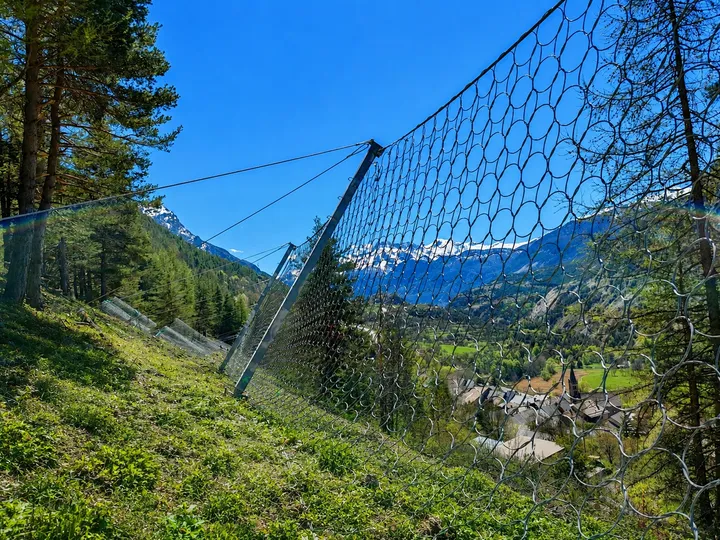
solutions
From hazard assessment to systems that are built to be checked, not just installed
Maccaferri provides integrated rockfall mitigation and slope stabilisation solutions that connect hazard assessment, engineered product specification, installation and continuous monitoring.
Our capabilities include:
Rockfall Mitigation Systems High-energy dynamic and static rockfall barriers, drapery and attenuation systems, anchored mesh stabilisation, rockfall netting solutions including MacArmour and SteelGrid, and debris flow barriers — each specified against real trajectory modelling and hazard characterisation rather than a catalogue default.
High-Strength Drape & Netting MacMat HS and related steel netting systems for slopes and pit walls where impact energy, geometry and rockfall trajectory demand a system engineered to that specific site, not a generic industry standard.
Geosynthetics & Earth Retention TerraMesh and the broader double-twist and geosynthetics range for slope and retaining-wall stabilisation, soil reinforcement, soil nailing and anchoring — supporting haul roads, pit walls and infrastructure on unstable or marginal ground.
Continuous Monitoring — HELLOMAC Maccaferri’s IoT platform lets mines monitor protection systems and geohazards continuously, so a rockfall barrier or mesh installation stays calibrated to site conditions that are constantly changing, rather than being treated as a completed task the day it goes in.
Geohazard Risk Assessment & Design Support Geohazard risk assessments, geotechnical investigations, design and engineering support delivered by a multidisciplinary team from concept through completion.
Installation Supervision & Asset Management Product supply and quality assurance, installation supervision and asset management solutions that keep protection systems performing for the life of the asset, not just at handover.
These capabilities enable Maccaferri to support mining and infrastructure clients from initial hazard characterisation through engineered design, installation and long-term, monitored performance.
meet us
Maccaferri Africa’s Team at SSX26
Nadeena Le’Tang, Senior Marketing Manager | Maccaferri Africa
Profile Coming Soon
Brendon Naidoo, Commercial Civil Engineer | Maccaferri Africa
Profile Coming Soon
Yugeshnee Naidoo, Head of Sales | Maccaferri East Africa
Profile Coming Soon
articles
Maccaferri’s Insights
When the Ground Moves First: Maccaferri and the Business of Keeping Africa’s Mines Standing
Beyond the Barrier: Why Maccaferri Treats Every Protection System as a Living One
When the Ground Moves First: Maccaferri and the Business of Keeping Africa’s Mines Standing